


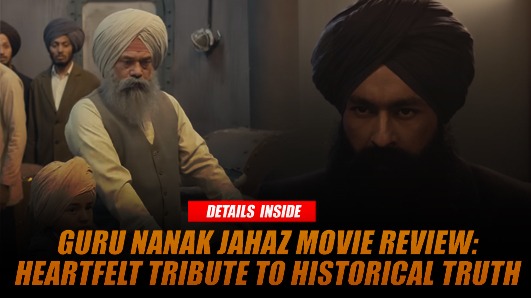
Guru Nanak Jahaz is more than just a film; it’s a journey into a forgotten chapter of history, revived with cinematic brilliance and emotional depth. With powerful direction, compelling performances, and meticulous storytelling, this film delivers a stirring tribute to the Komagata Maru incident that left an indelible mark on the Sikh diaspora.
Direction & Storytelling: Sharan Art’s Finest Work Yet
Sharan Art once again proves his mastery of historical narratives. Having already impressed with Mastaney, here he elevates his craft to a new level. Guru Nanak Jahaz doesn’t just depict events, it immerses the viewer into the emotional and political turmoil of 1914. His storytelling is patient, deliberate, and powerful, letting silence speak as loudly as words. The film avoids sensationalism and instead leans into emotional truth, making the audience feel every moment of rejection, resistance, and hope.
Performances: Quiet Power, Lasting Impact
Tarsem Jassar delivers a career-defining performance as Mewa Singh Lopoke. With restrained intensity, he captures the soul of a man torn between his identity and injustice. His eyes speak volumes, often carrying scenes with pure presence rather than spoken word.
Gurpreet Ghuggi, in a rare serious role, shines with quiet dignity. Shedding his comic image entirely, Ghuggi lends gravitas to his character with subtle emotion and grounded realism. The supporting cast, too, brings authenticity to the screen, ensuring no performance feels out of place or underplayed.
Visuals & Production Design: A Time Machine to 1914
From the dusty streets of Punjab to the ship stranded off the coast of Vancouver, the production design is flawless. Costumes, dialects, and even the ship interiors are painstakingly accurate. The visuals, muted, heavy, and textured, mirror the mood of the narrative. The Komagata Maru is not just a setting but a character itself, symbolizing both confinement and resistance.
Sound & Music: Understated, Yet Stirring
The sound design is minimalistic yet deeply affecting. Instead of overpowering background scores, the film uses silence, ambient noises, and subtle traditional compositions to evoke emotion. The music, when it arrives, blends with the narrative like a prayer, soft, solemn, and spiritual.
Writing: A Historical Rebellion in Dialogue
Co-written by Sharan Art and Harnav Bir Singh, the script is sharp, respectful, and deeply poetic. There’s no unnecessary dramatization, only the raw truth of what was. Dialogues are simple but profound, and the emotional impact is sustained through the lens of dignity rather than despair. The film doesn’t lecture; it remembers. It doesn’t just recreate the past, it questions the present.
Cultural Impact: A Wake-Up Call for the Modern Generation
Guru Nanak Jahaz is a cultural intervention. For many younger viewers, it is an introduction to the Komagata Maru incident. For older generations, it is a cinematic form of closure and recognition. The film resonates because it’s not just about a ship, it’s about identity, migration, and the fight for justice. Its overwhelming reception is proof that such stories matter, and that they need to be told with respect and craft.
Final Verdict:
Guru Nanak Jahaz is not just a historical film, it is a mirror to our collective past and a reminder of stories that demand to be heard. With stellar direction, unforgettable performances, and a soul-stirring narrative, it sails straight into the heart.
Rating: 4.7/5 – A cinematic voyage with purpose, pain, and pride.


